

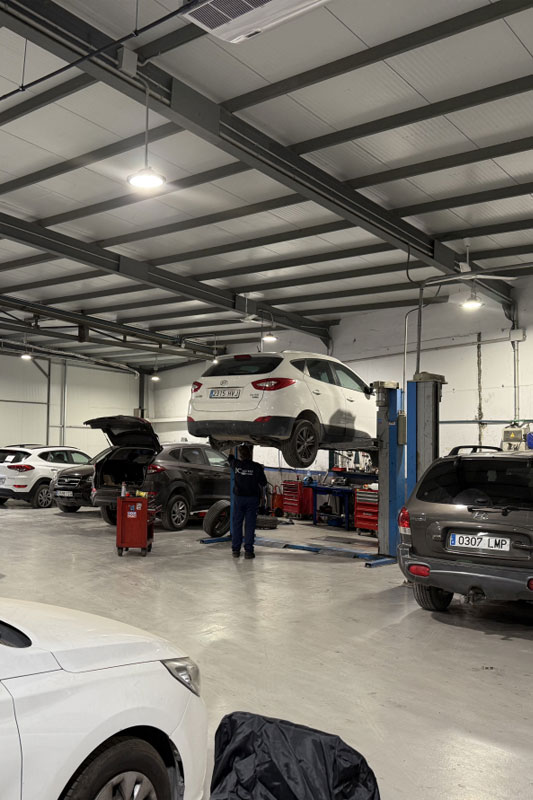
Description
✅ 1. Lighting and signage
-
Correct operation of Front lights, rear lights, turn signals, brake light, reverse light, license plate light, and fog lights.
-
Adjusting the height and aim of the lights (especially the low/passenger lights).
-
Condition of the pilots: no cracks or moisture.
✅ 2. Tires
-
Drawing with minimum depth of 1.6 mm.
-
Same type of tire on the same axle.
-
No cuts, bulges or uneven wear.
✅ 3. Brakes
-
Checking the status of the pads and discs.
-
Review of the brake fluid level.
-
Handbrake test (to ensure that the car is properly held on a slope).
✅ 4. Steering and suspension
-
Checking ball joints, shock absorbers and dust covers.
-
Absence of clearances in the direction.
✅ 5. Windshield and windows
-
Without no cracks or impacts in the driver's field of vision.
-
Checking the windshield wiper operation and of the condition of the brushes.
-
Windshield washer fluid level.
✅ 6. Emissions and noise
-
Exhaust system inspection: no leaks or excessive noise.
-
For diesel vehicles: possible inspection of the particulate filter.
-
Control of levels of polluting gases (especially if the car is smoking or there is an engine failure).
✅7. Engine and fluids
-
Level Review: oil, coolant, power steering, brakes and windshield wipers.
-
State of the visible straps, hoses and possible leaks.
✅ 8. Body and chassis
-
Doors, hood and trunk close properly.
-
No sharp edges, piercing oxides or loose elements.
-
Legible and well-fixed license plates.
✅ 9. Interior
-
Seat belts work and retract correctly.
-
Horn, odometer and dashboard indicators operational.
-
Rearview mirrors in good condition (interior and exterior).
✅ 10. Documentation
-
Keep up to date:
-
Driving license
-
Technical sheet
-
Current compulsory insurance
-


 English
  Spanish